News

Broadsens & Elipsa Use AI for Predictive Maintenance

Broadsens, a leader in low-power industrial sensors, and Elipsa a leader in plug and play AI solutions for IIOT are combining machine data with machine learning to provide easy to configure predictive maintenance at scale.

Industrial equipment such as pumps, compressors, generators, HVAC, etc. are critical to successful business operation.  Unplanned downtime of such equipment can be catastrophic in terms of economic loss to an organization.  Historically, maintaining such equipment has been reactive, incorporating onsite diagnostic or notifications of failures that have already occurred.

With the growth of the Industrial Internet of Things (“IIOT”) this critical equipment is becoming smart and connected.  With this new stream of data, machine learning has proven capable of detecting patterns indicative of future problems allowing for predictions of downtime and a proactive approach to equipment maintenance. This growing area is known as Predictive Maintenance.

Machine learning algorithms can learn from numerous types of sensors and data points.  Often times, the most effective data points for successfully building predictive maintenance algorithms have proven to be vibration data, learning that certain vibration profiles can predict the future failure of a machine.

Data Acquisition

The Broadsens SVT200-V is the only compact true real-time wireless vibration sensor that can monitor machine condition continuously with more than 3-year battery life in typical usage.

SVT200-V has two sampling modes: continuous low-speed sampling mode and high-speed sampling mode. It acquires x, y and z axis data in 16-bit resolution continuously. When the sensor detects a vibration event, it switches to high-speed 6.4kHz sampling rate, takes a fixed amount of data, calculates velocity RMS and acceleration RMS value, and sends the result plus temperature to the wireless gateway.

The smart algorithm inside SVT200-V adjusts the sampling mode dynamically and optimizes the energy usage. It can capture both high frequency and low frequency defects from the machine and structures.

The Broadsens wireless gateway connects and controls many sensors including the SVT200-V, SV200-A, SVT300-V, SVT300-A, SVT400-V and SVT400-A. The gateway includes 4-core ARM processor for real-time data visualization and processing. The gateway is configurable to transfer real-time sensor data to third-party systems via MQTT such as the Elipsa AI Platform.

Real time wireless vibration & temperature sensor

Broadsens real time wireless vibration & temperature sensor

The AI

Elipsa’s AI-based Predictive Maintenance seamlessly deploys across any workflow on the edge or in the cloud, increasing the availability and output of critical equipment. Elipsa’s self-training AI models and bolt-on approach enable AI deployments that are simple, fast, and flexible.

Through the use of Elipsa’s Rapid Deployment Templates, users can start intelligently monitoring critical equipment in as little as five minutes.  Elipsa’s Broadsens Vibration Analysis template takes in real-time velocity RMS data on the x, y, and z axis.

Once an SVT200-V is connected, data is streamed to Elipsa via MQTT. Elipsa’s Rapid Deployment Template automatically starts to learn the normal vibration profile of the machine that the sensor is attached to.  After a set number of data points (as defined in the template), Elipsa automatically builds a machine learning model and returns predictions back to the Broadsens gateway.

Elipsa’s innovative approach learns normal vibration of a given machine in order to detect abnormalities of any kind reported back to the user via the Broadsens software.

Case Study

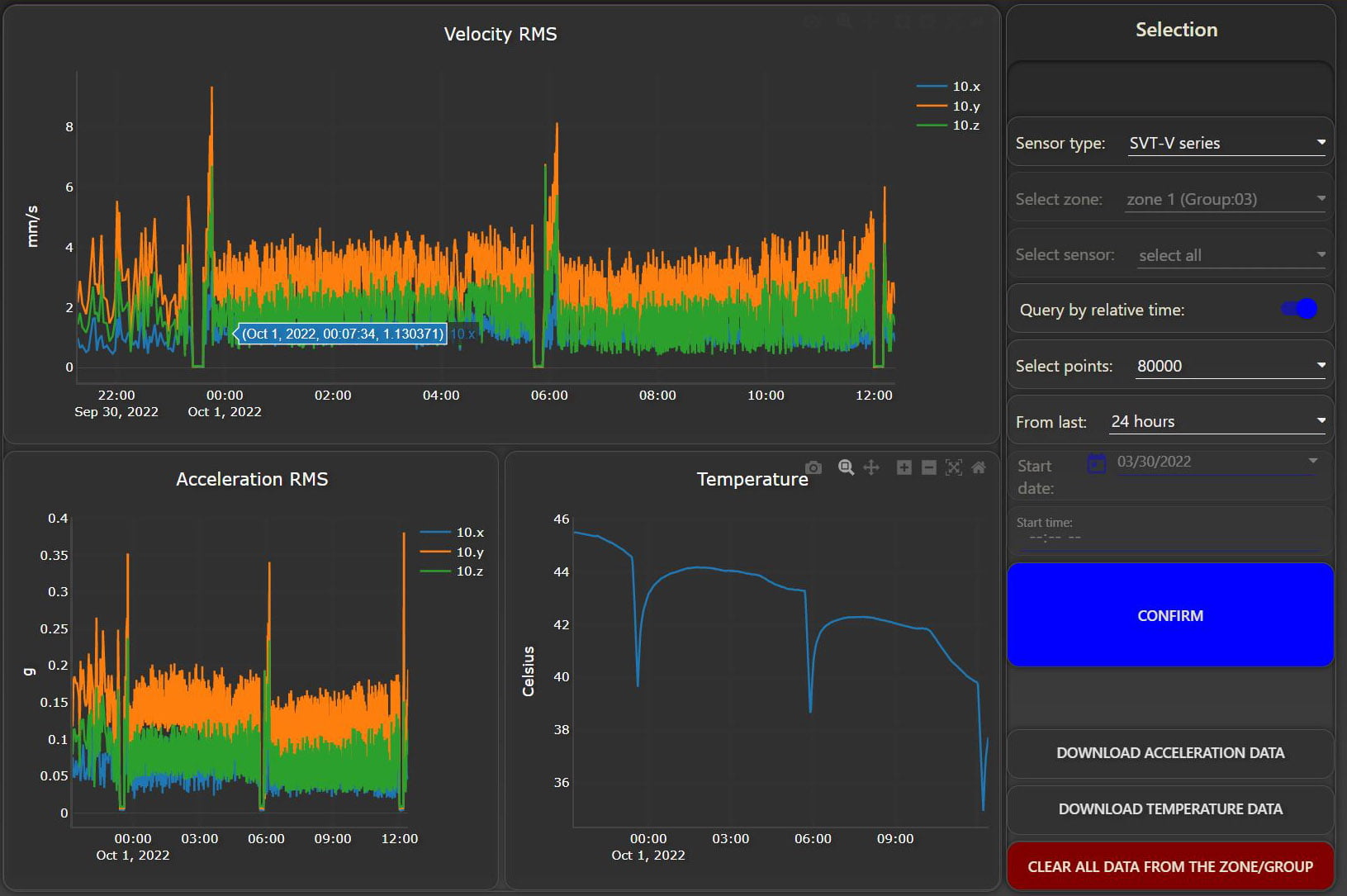
In this case study, Broadsens's wireless vibration sensor SVT200-V and wireless gateway GU200S, vibration analysis software BroadVibra are used to monitor an air condenser. SVT200-V inside single screw-hole package is used with magnet mount. The sensor with magnet mount can be installed in several seconds. Data are fed to Elipsa’s AI platform continuously in real time via MQTT protocol. 24-hour data from the sensor is shown as below.

After several days, the sensor was removed to simulate accident to the air condenser. Elipsa AI algorithm detected the change with both velocity RMS and acceleration RMS value. Velocity RMS value showed more significant change, which is consistent with the industrial standard that prefers vibration velocity RMS over acceleration RMS for machine condition monitoring.

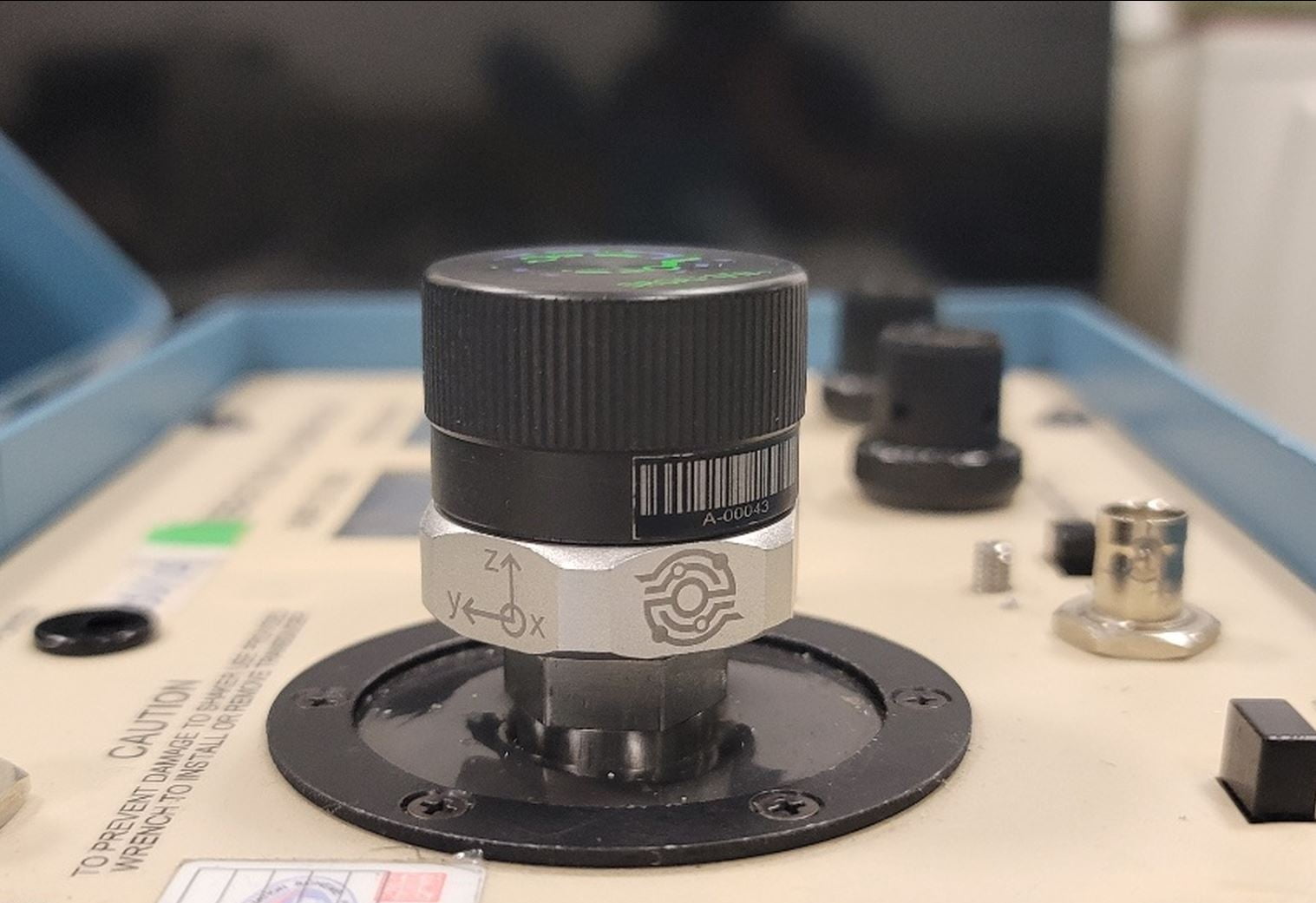
Wireless vibration sensor mounted on panel

Wireless vibration sensor mounted on panel

Vibration velocity RMS AI prediction

Vibration velocity RMS AI prediction

24-hour vibration data from the panel

24-hour vibration data from the panel

Acceleration RMS AI prediction

Acceleration RMS AI prediction

Predictive Maintenance at Scale

The combined Broadsens/Elipsa solution can easily be deployed across a range of equipment at scale. Make the promise of predictive maintenance a reality to start proactively managing critical equipment. There’s no need for a data scientist or a large capital ex spend.  This plug-and-play solution will reduce downtime, increase operating efficiency, improve scheduling of key employees, making your machines more sustainable.

IP68 Wireless Vibration and Temperature Sensors

After many testing, Broadsens updated its wireless vibration and temperature sensors' rating from IP67 to IP68. This rating could truly reflect the ability of the sensors working under tough environments. The testing were performed in different environments, including ice water submerge, deep water submerge, and long duration water submerge. The testing proved that Broadsens wireless vibration and temperature sensors are some of the best and toughest in the industry.

IP69 wireless vibration sensor

Ice water submerge testing

In this testing, Broadsens's wireless vibration and temperature sensors are submerged under iced water for more than 1 hour. There were random-selected one SVT-A series and one SVT-V series wireless vibration sensor. Both sensors took data continuously. Yes Broadsens's innovative design allow the ultra-low power wireless vibration sensors take data continuously.

SVT-A wireless vibration sensors include SVT200-A, SVT300-A and SVT400-A. They take triaxial acceleration raw data, which allows for predictive maintenance and AI-based analysis.

SVT-V wireless vibration sensors include SVT200-V, SVT300-V and SVT400-V. They take data continuously non-stop, which allows for real-time machine condition monitoring and accidents alarm in time.

Both type of sensors should be used for industrial IOT applications.

In the pictures below, the left pictures show long-duration testing. In this test, the sensors were submerge in a water bottle for more than 48 hours. There is no leak detected and the sensors are working normally after 48 hours. In the right picture, the sensors were submerged under a well water with a depth of 1.5m for more than 4 hours. The sensors are also working normally without any water damage. The wireless vibration and temperature sensors are perfect solutions for industrial IOT applications and machine condition monitoring.

IP69 wireless vibration sensor under water test

Long duration underwater test

Underwater test of wireless vibration sensor

1.5m under water test

Broadsens Wireless Vibration Sensors Obtained Calibration Certificate

Broadsens ultra-low power wireless vibration sensors recently obtained calibration certificate from Institute of Calibration and Technologies Co and KOLAS.

The calibration was performed using B&K 8305, Agilent 33220A arbitrary waveform generator, B&K 2692 condition amplifier and HP 34401A multimeter. The frequency range from 10Hz up to 1kHz was verified at x, y, z triaxial axes against the standard instrument. All x, y and z axes gave excellent results within 2% accuracy typically in the frequency range. The wireless vibration sensors can go up to 10kHz with up to 25.6kHz sampling rate.

wireless vibration sensor in testing

Broadsens wireless vibration sensor in testing

certified wireless vibration sensor

Sensor calibration certificate

If you are looking for ultra-compact, light-weight and high performance wireless vibration sensors with trusted result, then Broadsens has the right solution. Broadsens ultra-low power wireless vibration sensors have the highest battery efficiency in the industry. They are built for tough environments, so that you don't need to replace the broke sensors or replace batteries in industrial applications.

The wireless vibration sensors require to use Broadsens's wireless gateways for the maximum performance and long-lasting battery. There are multiple configurations of the wireless gateways for different industrial applications such as motors, pumps, engines, belts, bearings and gear box monitoring.

The system is ideal for IIOT applications, condition based maintenance and predictive maintenance.

#wireless #vibrationmonitoring #sensors #lowpower #iiot #predictivemaintenance #conditionmonitoring #conditionbasedmaintenance

Advanced Filtering for Vibration Analysis

Broadsens recently enhanced its filtering ability in the vibration analysis software BroadVibra 2.5.8. In this release, the negative edge effect is removed, which allows for more accurate time-domain and frequency domain vibration analysis. When the software is used with ultra-low power wireless vibration sensors SVT200-A, SVT300-A and SVT400-A, the system provides one of the most advanced filtering ability for machine condition monitoring and predictive maintenance. BroadVibra vibration monitoring and analysis software is installed inside the wireless gateways with life-time license. Users do not need to pay subscription fee to use the software, which can save the cost in the long run. Moreover, the software comes with 1-year free tech support and upgrade.

vibration analysis with FFT and high-pass filter

Figure 1. High pass filter with edge effect

In Figure 1, a 4th order high-pass filter is applied to the vibration signal. The vibration signal is obtained from a SVT200-A wireless vibration sensor mounted on a industrial fan. The wireless vibration system is used for industrial fan  vibration monitoring. The wireless vibration sensor takes triaxial raw acceleration data and send them to the wireless gateway. The data acquisition mode is "single DAQ" mode, in which 4,096 sample points are taken. The sampling rate is set at 3.2kHz. The data resolution is 16-bit.

At the very beginning of Figure 1, if you look closely, then you may notice that there is an edge effect of the filtering data. This is due to the reason that all filters have a transient effect, which needs a short time period to settle. The edge effect is especially obvious in z-axis in this testing.

Figure 2 removes the x and y axes, and zooms in the beginning of the z-axis curve. You can clearly see the edge effect in Figure 2. In Figure 3, the edge effect is removed automatically in the BroadVibra vibration analysis software version 2.5.8 and above. This allows more accurate time-domain and frequency domain vibration analysis.

Vibration FFT analysis edge effect

Figure 2. Zoomed in edge effect at z-axis

Vibration analysis edge effect removed

Figure 3. Edge effect automatically removed

The BroadVibra vibration analysis software allows user to select high-pass, low-pass and band-pass filtering, plus continuous adjustment of the cutoff frequency. The filtering order can be selected from 4th order, 8th order and up to 12th order. With the advanced filtering ability and FFT analysis at the edge-computing gateway, Broadsens offers some of the best wireless vibration sensors in the industry.

BroadScan Software GUI Update

Broadsens's ultrasonic devices such as BroadScan D110C, BroadScan D100 and BroadScan D200 have been using the same software GUI in the past seven years. This year, we decided to give it an upgrade. The upgrades includes the following:

  1. 80% faster data acquisition speed. The underlying ultrasonic program gets a huge performance boost. Structural scan is more than 80% faster than before. A scan of more than 30 steps with sampling points of 8,192 can be done in several seconds now.
  2. Automated temperature compensation and baseline selection. At algorithm side, temperature compensation is automated and the baseline is automatically based on the temperature. The software also incorporates intelligent algorithm to add new data with temperature value outside the current database into the baseline. The algorithm differentiates the variance caused by temperature change or structural change.
  3. Combined GUI for other sensors such as vibration sensors, distance sensors and strain sensors.
  4. Vibration trend analysis ability with selectable time span from "live data" to "one year". This enables user to quickly tell the vibration trend of the monitored structure/machines.
  5. Integrated time-series database. A new time-series database is used to save damage index, ultrasonic sensor status, vibration velocity, vibration RMS value, distance, strains and temperature measurements.


New ultrasonic scan GUI for SHM

New ultrasonic scan GUI

With the new GUI design, baseline data selection is much easier and faster than before. Data file can be selected quickly from the dropdown menu too. Moreover, user can adjust the analysis window intuitively and the variance is shown instantly with the analysis windows adjustment. In the old software, analysis window value has to be adjusted by editing a separate set up file.

User can start ultrasonic scan manually. Ultrasonic scan can be automated by using the combination of a timer, plus a scan interval.

Multiple projects can be created by an user for different structures/machines. Project can be toggled quickly from the dashboard too.

In the newly designed multi-sensor GUI, vibration analysis is added. Vibration analysis focus on easy usage, so that two most commonly used vibration parameters (vibration speed and vibration RMS) are selected. In the vibration trend analysis, the maximum value of vibration speed and vibration RMS is selected in each small interval, so that the worst case condition of the machines/structures can be identified by users. Other sensors such as distance sensor, strain sensors (up to 4 strain gauges can be used), and temperature sensor are also displayed in the unified GUI.

User can select to see the "live data", in which case sensor data updates quickly to show the live status. Then a user can select to view one day's data, or one week's trend, up to 1 year's trend. This helps identify machine or structure defects quickly.

Multisensor interface with vibration trend period selection

Multisensor interface with vibration trend period selection

Finally, the vibration sampling is boosted from the default 50Hz up to 400Hz. Moreover, the vibration data acquisition is continuous, compared to periodic with big gaps in the middle. The vibration analysis is performed automatically with thousands of times more data than before, which makes the vibration trend much more powerful than before. This improvement benefited from our expertise of ultra-low power wireless vibration sensors and vibration analysis algorithms.

Posts navigation

1 2 3 4 5 6 7 8 10 11 12